How Self-Compassion Saved my Daughter…and Me

An intergenerational legacy of healing

Hello Friends,

Today I’d like to share a post that I wrote many years ago. It is my family’s journey to self-compassion and why I dedicate my life to intergenerational healing. Ultimately my daughter, Maya, grew even more self-compassionate than me (see this rticle I wrote when she was 17). You can also scroll all the way down to see an interview with her about how she has grown and changed over the years 🙂

Oct 10, 2017

My older daughter Maya was born sensitive, curious, and creative. As Maya grew, I learned that all of her five senses were extra sensitive. For her sounds were louder, smells and tastes more acute, she had a strong draw to everything tactile, and she saw “light shows” that made artificial lighting both intriguing and exhausting. Maya’s overstimulated nervous system made it difficult for her to regulate her emotions, and full out meltdowns were a common occurrence. When Maya was given free time, her curiosity and creativity allowed her to engage herself in a task for hours. At the same time, transitions and rote tasks were incredibly challenging for her because they pulled her away from the mesmerizing present moment.

2 years old Maya on the beach.

When Maya became preschool age, I felt challenged as to how to both support her curiosity and creativity as well as facilitate her acquisition of simple life skills and lead her to accept redirection. Maya’s intense wonder and curiosity made walking from her preschool to the car parked in front of the building a half-hour endeavor (with periodic meltdowns), and brushing her teeth a task that required many, many redirections.
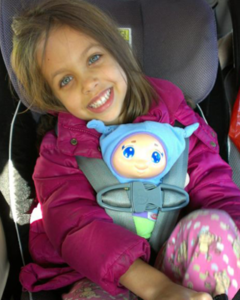
5 years old Maya

I practiced mindfulness to stay calm. I tried making tasks and transitions playful. And I tried “love and logic” to see if consequences would help her to acquire a bit of self-discipline. As much as I tried to be neutral or compassionate when Maya failed to complete a “simple” task, Maya picked up on my subtle signs of frustration. Over time she began to develop the low self-esteem that comes from knowing that you are not living up to the standards of the adult who you so desperately want to please. She began to push herself to try to complete a task (like hanging up her jacket) with intense effort and self-criticism. She began to be ashamed of her curious, creative, sensitive, beautiful self.

To have my daughter begin to lose her sense of self-worth was my worst nightmare, and I began to see a helping professional in the hopes that I could learn to be more patient and less reactive to Maya’s distractibility and frequent tantrums. The professional who I worked with suggested that I needed more self-compassion. She suggested that I was “too hard on myself.” Hmmmm……
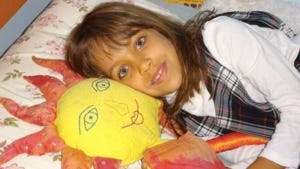
7 years old Maya

I read a little bit about self-compassion, and then I signed up for a Mindful Self-Compassion course. I learned how to truly “be there” for myself in my difficult moments. I learned how to let go of shame about my imperfections because I began to understand deeply that we all have imperfections. I began to ask myself how I could be kinder to myself. I had always been good at “self-care,” but I began to practice self-kindness. And a remarkable thing began to happen, as I began to apply self-compassion to myself, I naturally began to help Maya to acquire self-compassion as well.

As I learned how to walk myself through the voice of shame into the sunlight of compassion, I was increasingly able to walk Maya through the voice of shame into the sunlight of compassion. As I learned how to embrace my own imperfections, I became able to help Maya to embrace her imperfections. As I grew in self-love and self-appreciation, I helped Maya to grow self-love and self-appreciation. And my daughter and I both began to thrive.

Jamie-Lynn with her daughters.

Self-compassion proved to be the missing ingredient to helping Maya learn to apply self-discipline with kindness. She can now [at age 9 when I wrote this blog] acknowledge that because of her intense curiosity and creativity, performing a rote task can be incredibly challenging for her. And she has been increasingly able to use her strengths to make a game out of routine tasks. Self-compassion is not so much a technique as it is a way of being. A way of being with ourselves that naturally transfers to those we love. Learning to practice self-compassion on myself was the best gift I could ever have given my daughter. It saved her from a voice of shame and self-criticism, and it gifted her with an appreciation for her unique and beautiful self.
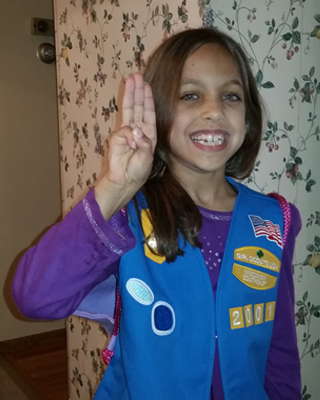
9 years old Maya

Reminder: I offer Mindful Self-Compassion classes and private sessions for adults, teens, and children of all ages. Learn more about my upcoming Compassionate Parenting and Parent-Child Mindfulness and Self-compassion classes here.


Thank you for being on this life-changing journey with me.

With love,

Jamie Lynn

P.S. My once four-year-old daughter is now almost 17! If you didn’t yet view our podcast episode together, I’ve included a link below.
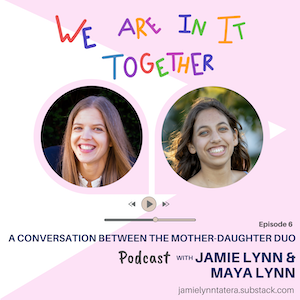
Podcast with Jamie Lynn & Maya Lynn

Forgive Yourself

Dr. Chris Germer Helps us Release Parenting Shame

Hello friends,

The other day, I was on social media, and I saw this parenting post from the Institute of Child Psychology (please note my comment on the bottom of the post):

Parenting post from the Institute of Child Psychology and Jamie-Lynn's comment.

Of course yelling is not an optimal parenting (or teaching) strategy, and we don’t want to repeatedly berate our children and become an internalized inner critic. But if we pressure ourselves to be a perfect parent (or teacher), we won’t help our kids learn that it’s human to make mistakes. We all sometimes lose it as parents, and when we do, it’s an opportunity to forgive ourselves. We can acknowledge our mistakes and our humanity, and begin again.

Beating ourselves up when we fall short as caregivers is just as unhelpful as berating our children when they make mistakes. It’s not loving, and it’s not helpful. The alternative? Self-compassion.

Self-compassion is the antidote to shame, and today I am joyful to share a cherished interview with Dr. Christopher Germer. I originally recorded this interview for my Compassionate Parenting course, but I’m sharing it with you now as my last podcast episode of the season.

Our interview includes a heart warming and insightful conversation along with a couple of short guided practices. It is so worth your time. Please listen to it.

And remember, no matter how imperfect you are, you can love yourself right now. Loving yourself amidst your imperfections will help you to own your mistakes, and it will also help you love your imperfect child. My own journey of self-acceptance has opened the doorway to truly accepting and loving my partner and my children as imperfect beings. And the more our family lovingly embraces each other amidst our imperfections, the more we have a sense of belonging in our family.

I must be honest, forgiving ourselves can be easier said than done. It took large doses of Mindful Self-Compassion training and years of practice to shift my habit of beating myself up, but the journey is so worth it! And self-compassion always meets us just where we are (see upcoming courses here).

So, please, forgive yourself for being imperfect, and begin (or continue) the journey of loving yourself. Remember to listen to my podcast episode with Chris Germer on your favorite podcast app. Just like self-love, it’s freely given to you.

Wishing you light and love,

Jamie Lynn

Can We Stop a Child’s Meltdowns?

And how self-compassion can help

Hello Friends,

Today I’m focusing on a common parenting challenge: Meltdowns. Whether a child is two or four, or sixteen, it can be extremely challenging to witness and stay calm when a child is melting down. And if we have a child that is neurodiverse or highly sensitive, the challenge can be even more acute.

It was my own daughter’s tantrums when she was 4 years old that brought me through the doorway of a therapist’s office and to self-compassion over a decade ago (I’ll share a blog on this soon).

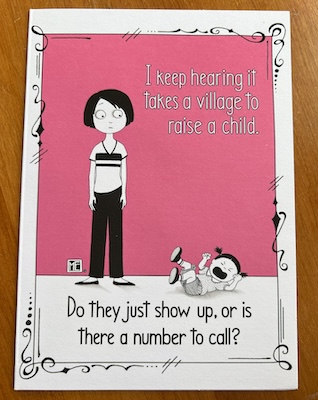
A card saying that Tantrums can feel like too much for a parent to bear alone.

This card says so much! Tantrums can feel like too much for a parent to bear alone.

If you have a child who is sensitive or neurodiverse…

Kate Lynch is a mom and mindfulness coach who helps parents of neurodiverse children. She interviewed me last month for her podcast, and she also wrote an article that highlighted our conversation regarding how self-compassion can help in parenting sensitive and neurodiverse kids. If you have a child who is sensitive and/or neurodiverse, you will likely relate to much of our conversation.

You can read the article she wrote about our conversation regarding meltdowns here.

There’s so much goodness and common humanity in our conversation in the above article, and also in our interview below.

At around the 14:00 minute mark in the interview, I share my favorite self-compassion practice to use in the midst of a child’s meltdown and guide listeners through the practice of Breathing Compassion In and Out. Self-compassion can help both children and adults cope better and recover faster from a meltdown.

Back to the original question: Can we stop a child’s meltdown?

So you might be wondering about the whether or not we can stop a child’s tantrums. The answer is complex, because honestly, it depends.

And what does it depend on?

  • It depends on the temperament of your child (and you).

  • It depends on how well-connected you and your child are to one another.

  • It depends on how well-slept and well-fed your child (and you) are.

  • It depends on how many other difficult things you and your child have already coped with that day (this can be huge). In other words, how resilient and well-regulated do you and your child feel before the challenge arises?

  • And it depends on how many resources you and your child have for coping with challenges (like mindfulness and self-compassion)!

There are more things I could add to this list, but these are a few of the elements that can affect how much or how little influence we will have over whether our child’s unhappiness will result in a full-on meltdown on any given day.

Resources to cope with shame—it’s not your fault!

One of the emotions that can arise for a parent when their child has frequent meltdowns is shame. It’s so tempting to think that we are doing something wrong because we can’t tame our child’s outbursts. While it’s good to get curious about the factors in the last section, it’s massively unhelpful to assume that it’s “our fault” or that we are doing “something wrong” because our child has frequent meltdowns.

If you have a child with big emotions and lots of meltdowns, IT IS NOT YOUR FAULT. And, self-compassion can help.

Next week I’m excited to share an interview between myself and Chris Germer regarding self-compassion, shame, and parenting. It is my favorite interview…ever. So powerful. I can’t wait to share it with you because you deserve to know you are a GOOD parent, and how self-compassion can help you show up as your best self for your child, again…and again…and again.

Wishing you light and love,

Jamie Lynn

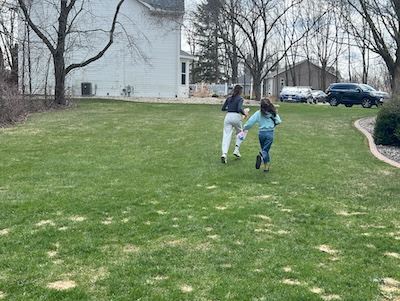
P.S. Here’s a picture of my girls at an Easter egg hunt at grandma and grandpa’s house. Even though they are 12 and 16, they still had fun with their cousins looking for eggs!

Egg hunt at Easter.

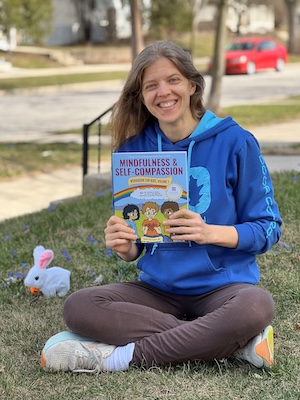
P.P.S. And here’s a picture of me, my beloved workbook, and one of the girl’s Easter bunnies.

Jamie-Lynn with the workbook and Easter bunny.

Thank you for being on this journey with me.

“I’m not like other kids”

Or is she!?

Hello Friends,

For the last few months I have been teaching Volume 2 of the Mindfulness and Self-Compassion Workbook for Kids to a neighbor’s daughter who sometimes struggles with anxiety. The other day when I came to teach her a lesson from the workbook she said to me, “I’m not like other kids, Jamie Lynn.”

“Why not?” I asked her. I expected that she was going to tell me something deeply troubling about herself, and I was prepared to meet whatever she said with compassion.

But she surprised me with her reply, “Because I actually want to do this workbook. I love the comics and all the lands, and I actually want to get this workbook when it comes out and do it again.”

A smile spread across my face, “You are like other kids,” I told her. “Other kids love the workbook, too.”

“Really?” she said.

“Yes,” I responded. “But that’s not common is it? Kids don’t usually love a workbook, do they?”

“No,” she replied. Then a look of realization came across her face, “That’s why you’re making this workbook! Because it’s a workbook that kids really want to do! We have to tell people so more people know!”

It was so sweet that it touched my heart, and I wanted to share. Children in diverse schools in Milwaukee and many of you who have emailed me about how your child loves the Mindfulness and Self-Compassion Workbook for Kids, Volume 1, know what my neighbor’s daughter just discovered—this is not your ordinary workbook!

My 8-year-old neighbor IS like other kids, but these workbooks are not like other workbooks. It’s so fun that kids don’t even realize that they are learning. But they are learning—so many great mindfulness and self-compassion skills. And this is how learning should be for children (and grown-ups!)—it should feel like play. The Mindfulness and Self-Compassion Workbook for Kids, Volumes 1 and 2 make this aspiration a reality.

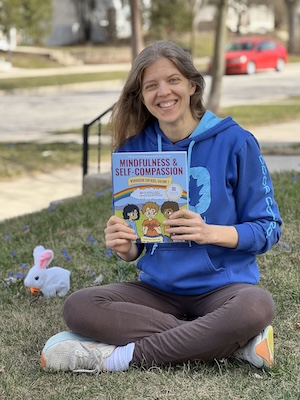
Jamie-Lynn holding Mindfulness and Self-Compassion workbook for Kids, Volume 1.

Note: Volume 2 will be released January 2026.

If you already know how much kids love these workbooks, please share about it with a friend or give the workbook a review to spread the word! And if you just learned this fun fact for the first time, get a copy of Volume 1 for a child that you care about. It’s a wonderful gift to give a child (or yourself).

Volume 1 is available on Amazon here, or you can support a local bookstore and buy it here.

Buy it locally

Thank you for being on this wondrous journey with me!

Love,

Jamie Lynn

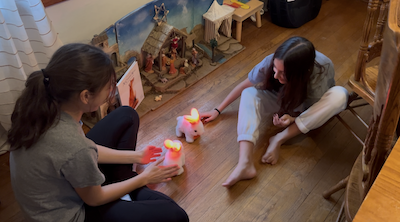
P.S. My mom sent two mechanical, light up bunny rabbits to my daughters for Easter, and here they are playing with them. And yes, they are playing with their Easter rabbits in front of the Christmas nativity that I hadn’t taken down yet. But good news! I just put the nativity back in the attic ;).

Maya and Anjali are playing with Easter rabbits.

Compassion

Do you still judge this mom after you hear the whole story?

Hello Friends,

We oftentimes hear about difficult events in the news, but when it touches our lives personally, we feel it more deeply and the reality becomes more profound.

This past week I was teaching students mindfulness and self-compassion lessons at a school on the north side of Milwaukee. Kids love the lessons from my workbook for kids, but this particular day there was a handful of students in my first hour class who were having a rough time. Before I came in to teach, the first-grade teacher had called the mom of one of the students who had been misbehaving. As I began to teach my lesson, the mom came in, very dysregulated, and started cussing out her child for her misbehavior in front of the whole class. At this point you might be judging the mom, but wait until you hear the whole story in the below video before you judge. I hope the story moves your heart, just as it opened mine.

This is the poem that I share at the video’s end:

Compassion
By Miller Williams

Have compassion for everyone you meet, even if they don’t want it.
What appears bad manners,
an ill temper or cynicism is always a sign of things
no ears have heard, no ears have seen.
You do not know what wars are going on
down there where the spirit meets the bone.

The suffering that children experience is real. I wish there was more we could do to stop the harm, but I do know that bringing compassion and self-compassion to these kids’ classrooms can make a difference.

If you’d like to help self-compassion reach all children, especially children who need it the most, you can contribute to the fundraising effort to get the workbooks translated into Spanish.

Thank you for being on this journey with me.

Wishing you light and love,

Jamie Lynn