Self-Compassion Professional Learning for Educators
Research-based training that supports educators in building resilient classrooms, strengthening regulation, and helping kids navigate big feelings.
This self-compassion learning for educators integrates a blend of adult Mindful Self-Compassion (MSC) training, developed by Kristin Neff, PhD, and Christopher Germer, PhD., and Jamie Lynn Tatera’s research-based Mindfulness and Self-Compassion for Children and Caregivers (MSC-CC) program, which is an approved adaptation of the Mindful Self-Compassion program.
Graduate-level professional development credits are available for educators through Courses4Teachers and are commonly used for license renewal and salary advancement, subject to district approval.
Teaching Is Demanding Work
When students are overwhelmed by big feelings, learning can come to a halt. Fear of failure can lead kids to shut down or refuse to try, and dysregulation and conflict can take over the room.
These moments don’t just affect students. They place enormous demands on teachers, especially when time, energy, and support are already stretched thin.
I know this firsthand. I’m an educator too, and I teach in classrooms in Milwaukee where these moments are part of the daily reality. Educators need tools that support students and sustain the adults in the room.
Self-Compassion as Professional Learning
Self-compassion is often misunderstood as something soft or permissive. In reality, decades of research show that responding to difficulty with kindness and clarity supports motivation, emotional regulation, and perseverance.
For educators, self-compassion functions as both a personal resource and a classroom practice. It helps us be steady under pressure, recover after hard moments, and create learning environments where students feel supported and encouraged to keep going.
This professional learning is designed to support both teaching and learning.
What This Looks Like for Teachers
Self-compassion practice helps teachers increase their capacity to:
- Center themselves when things aren’t perfect in their classrooms
- Offer themselves empathy for teaching challenges so they can recover more quickly
- Balance compassion for themselves and their students, so they can both co-regulate and also refuel themselves when needed
- Motivate themselves and students with kindness, creating the best possible environment for teaching and community.
An educator’s self-compassion practice builds the foundation for helping children grow courage and kindness for themselves and others.
What This Looks Like for Students
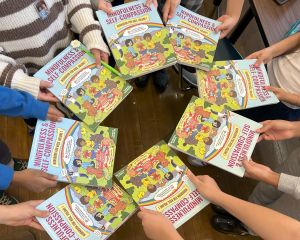
In classrooms, self-compassion shows up through simple, developmentally appropriate practices that fit naturally into the school day. These practices support learning rather than pull time away from it.
Students learn to:
- notice what they’re feeling
- remember they’re not alone
- respond to mistakes with care
- soothe themselves and try again when learning feels challenging
These practices teach both comfort and courage. They build real skills, not slogans.
Together, they form a classroom approach known as Courage and Kindness for Kids, offering a playful, research-based way for elementary educators to support self-compassion in everyday classroom life. Kids genuinely enjoy these practices, and when students are engaged, teaching feels lighter.
How Self-Compassion Takes Root in Classrooms
Effective self-compassion teaching happens through educators, not materials alone. It happens through four interconnected steps that form the relational framework used in this work:
- Educators practice self-compassion themselves, building steadiness, resilience, and presence.
- Educators model self-compassion in real moments, showing students how to respond to mistakes and stress.
- Educators become the external compassionate voice, using shared language and habits that students begin to internalize.
- Students practice self-compassion skills, making formal teaching meaningful and effective.
Educators do not need to have self-compassion “figured out” before teaching it. Many learn and practice alongside their students, and teaching often deepens the educator’s own practice over time.
Two Learning Pathways
This professional learning supports educators through two complementary pathways: personal self-compassion practice and classroom application. Educators may begin with either and often find that each deepens the other. Both online and in-person training is available.
Mindfulness and Self-Compassion for Educators
Primary focus
Educator well-being, resilience, and presence.
Who it’s for
Any adult (commonly chosen by educators across grade levels).
What you get
Personal Mindful Self-Compassion practices and guided group learning.
CE credits
Eligible for 1–3 graduate-level professional development credits (where applicable).
The goal
Supporting educator steadiness, resilience, and presence.
Mindfulness & Self-Compassion for Kids
Primary focus
Student regulation and classroom culture.
Who it’s for
Elementary educators (elementary grades).
What you get
Playful classroom curriculum, animal characters, and practical teaching tools.
CE credits
Eligible for 1–3 graduate-level professional development credits (where applicable).
The goal
Helping kids handle big feelings, stay engaged, and learn together.
Why I Created This
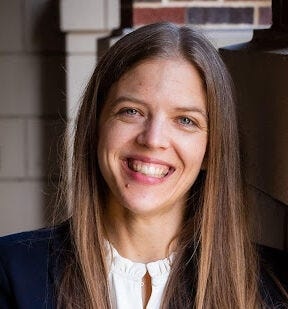
I first encountered self-compassion as a parent, and it quickly became clear how transformative it could be for children. But I was an educator long before I was a parent. And I realized that if we want self-compassion to reach more kids, educators are essential.
I know what it’s like to be in a classroom with students who are struggling to self-regulate while carrying too much and having too little time. When we’re depleted, it’s incredibly hard to show up with patience, steadiness, and presence for our students.
Self-compassion isn’t just for kids. It’s a practice that helps us as educators navigate the daily stresses of teaching with more ease and less burnout. Personally, I can’t imagine being an educator without this resource.
I’ve created self-compassion trainings for educators, alongside classroom-focused learning that helps you teach these same skills to your students. This reflects an intergenerational approach, supporting educators and children through the same core principles.
Where This Work Comes From
This curriculum is a school-based application of Mindfulness and Self-Compassion for Children and Caregivers (MSC-CC), my research-based, parent–child adaptation of the Mindful Self-Compassion program developed by Kristin Neff, PhD, and Christopher Germer, PhD.
I developed this school-based version of MSC-CC through direct work and collaboration with children inside and outside of the classroom, with kids actively shaping what felt engaging, playful, and meaningful. Over the past seven years, I have continued testing and refining these practices in Milwaukee Public Schools and in other elementary school environments. The work has been shaped by real classroom conditions, including limited time, large class sizes, and varied student needs.
I did not design this for ideal conditions. I designed it for the classrooms we actually have.
Professional Learning & Continuing Education
Educators are stretched. Time, energy, and financial constraints are real, and professional learning needs to be both meaningful and practical.
That’s why I’ve partnered with Courses4Teachers, so educators who take self-compassion trainings with me can apply for graduate-level professional development credits commonly used for license renewal and salary advancement. These options may be pursued individually or through school-, district-, or organization-supported professional development.
Whether you’re focused on your own practice or bringing skills into your classroom, these courses are practical, research-based, and eligible for continuing education credit.
Continuing Education for K–12 Educators
Graduate-level professional development credits are available through Courses4Teachers
- Credits are commonly used for educator license renewal and salary advancement.
- Eligibility and acceptance are determined by district guidelines.
- Courses4Teachers uses educator-friendly course titles so transcripts align with common district professional development categories.
- Specific CE eligibility and credit details are listed on individual course pages.
- Questions about continuing education or professional learning options? You’re welcome to contact Jamie Lynn Tatera.
Where to Begin
There’s no single right way to start. Some educators begin by focusing on their own self-compassion. Others start with classroom practices.
For Your Own Well-Being
Courses focused on growing your own self-compassion practice, supporting steadiness, resilience, and compassionate presence in the classroom.
For Your Classroom
Playful, classroom-ready practices you can use with students right away.
- Free mini-course – Introductory lessons and framework
- Level 1 & Level 2 teacher training – Professional learning to teach mindfulness and self-compassion to kids
- Mindfulness & Self-Compassion Workbooks for Kids – 2-volume classroom set
Start wherever makes sense for where you are right now.
Related Self-Compassion Resources for Educators
- Dr. Karen Bluth’s website includes links to continuing education opportunities focused on teaching self-compassion to teens in school settings.
- The Greater Good Science Center is offers cohorts for educators focused on resilience and well-being in schools.