
Strengths and Struggles
A Self-Compassion Activity for Kids
How often do we try to build up children’s self-esteem because we want them to feel good about themselves?
My dear friend shared this story that illustrates the limits of self-esteem:
“When I was a child I had a hard time reading. One afternoon, my big sister helped me study for a test, and for the first time, I got 100%. People started calling me smart, and the external validation and praise felt so good. But every time I fell short I became deflated again. My self-esteem went up and down, and I thought the solution was to be good at everything.
When I had kids, I tried to create a Montessori environment in our home so my kids would have lots of opportunities to feel good about themselves. I really wanted to support their success, but I didn’t know how to help them handle failure. And their failure felt like my failure too until I found self-compassion. I learned that a stable sense of self-worth doesn’t come from gathering evidence of how good you are. It comes from understanding that failure is part of life.”
If we want to help kids develop a stable sense of self-worth, we need to help them understand that all kids (and adults) have both strengths and struggles.
You can try this activity from the Mindfulness and Self-Compassion Workbook for Kids, Volume 2, with your child (or yourself):
Five Steps to the Strengths and Struggles Exercise
Sometimes it’s hard to remember that everyone has ways they are strong and ways they struggle.
Here are 5 steps that serve as a reminder.
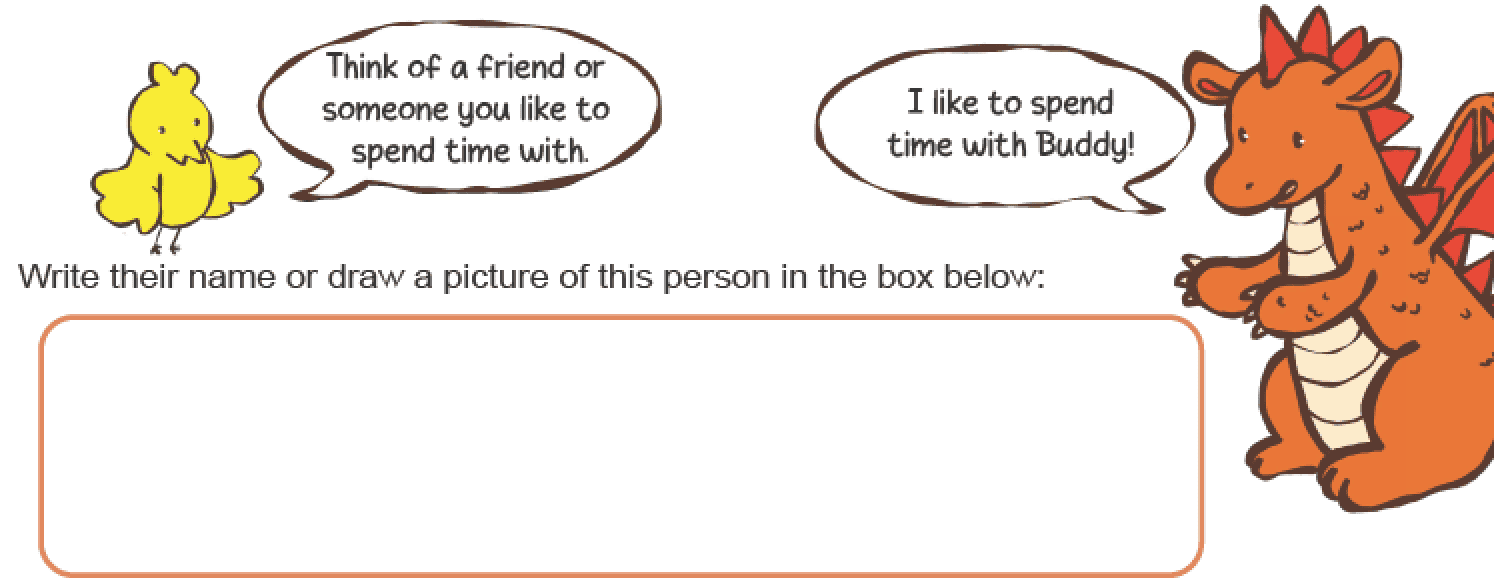
1. Think of Someone Special
Follow Curi, the curious chick’s instructions below.
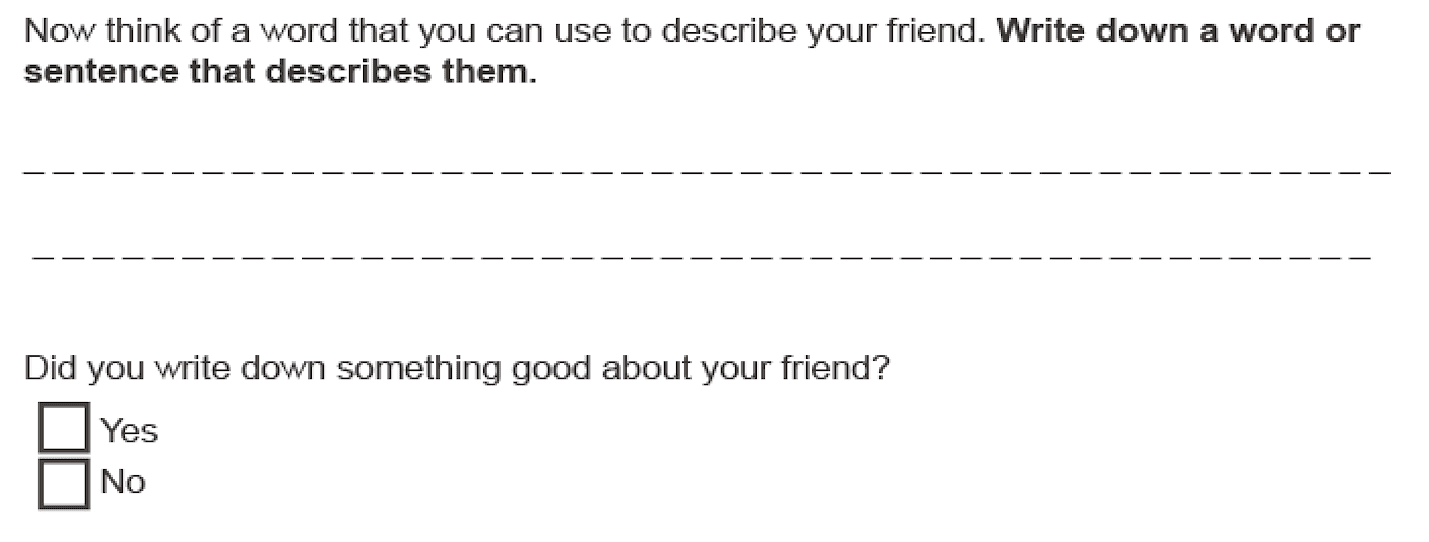
2. How Would You Describe Your Friend?
Write down the first thing that comes to mind about your special person.
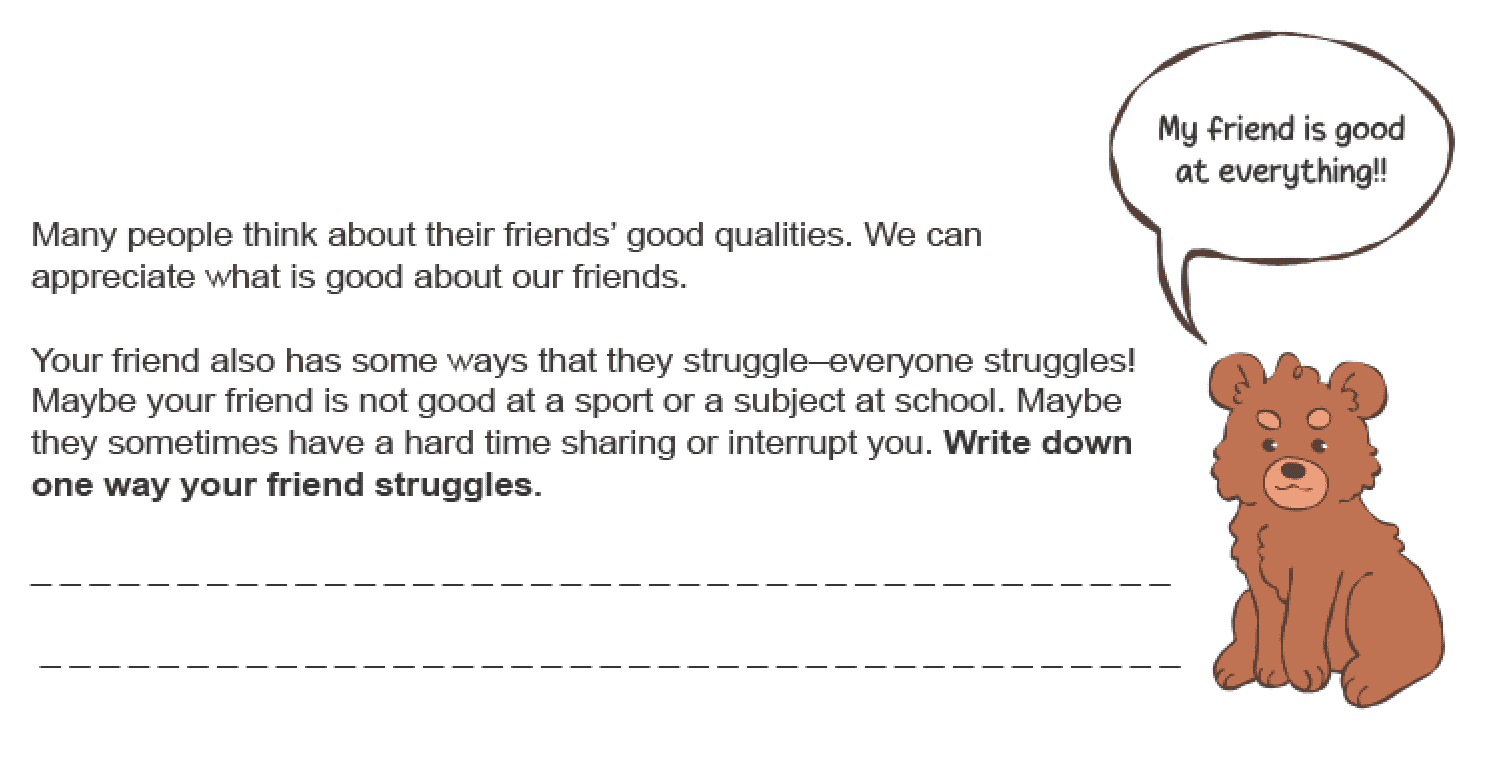
3. Everyone Struggles Sometimes
Now, write down something that your friend struggles with. It may be difficult to think of something, but we can remind ourselves that struggles are part of life.
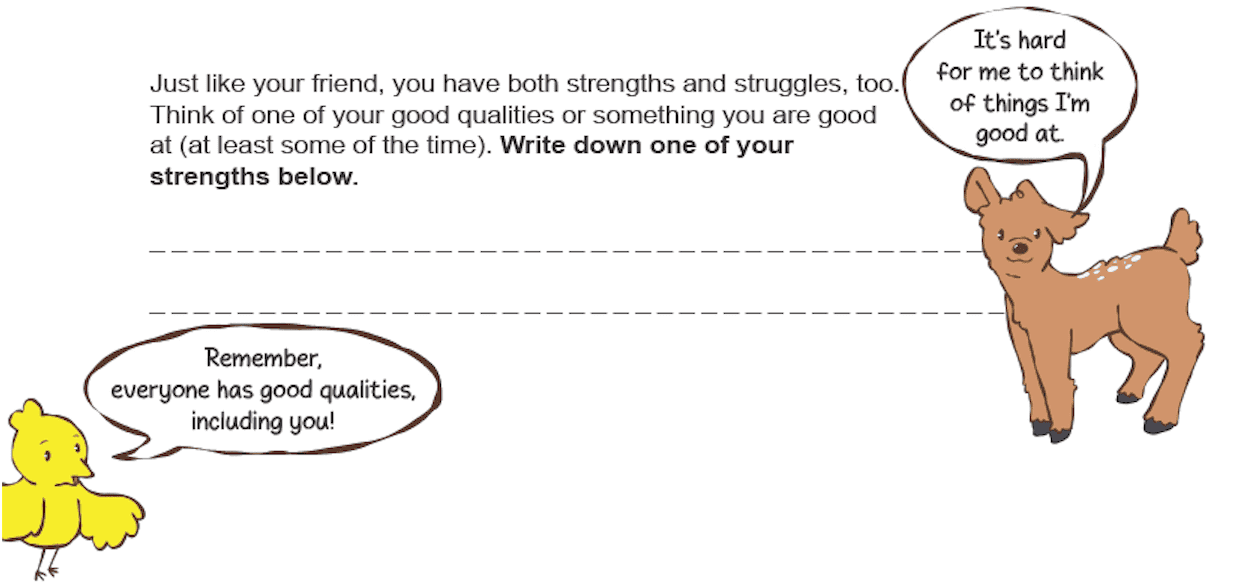
4. You Have Strengths Too!
In steps number 1 and 2, we thought about a friend and their good qualities. This time, use the lines below to write down some of your strengths. If it’s tricky to think something good about yourself, pay special attention to Curi’s message below.
5. In What Ways Do You Struggle?
Marcos, Anjali, and Khalil from the Kids Team of the Mindfulness & Self-Compassion Workbook For Kids, Volume 2, share with us some ways in which they struggle. Use the lines below to write down something that may feel tricky to you.
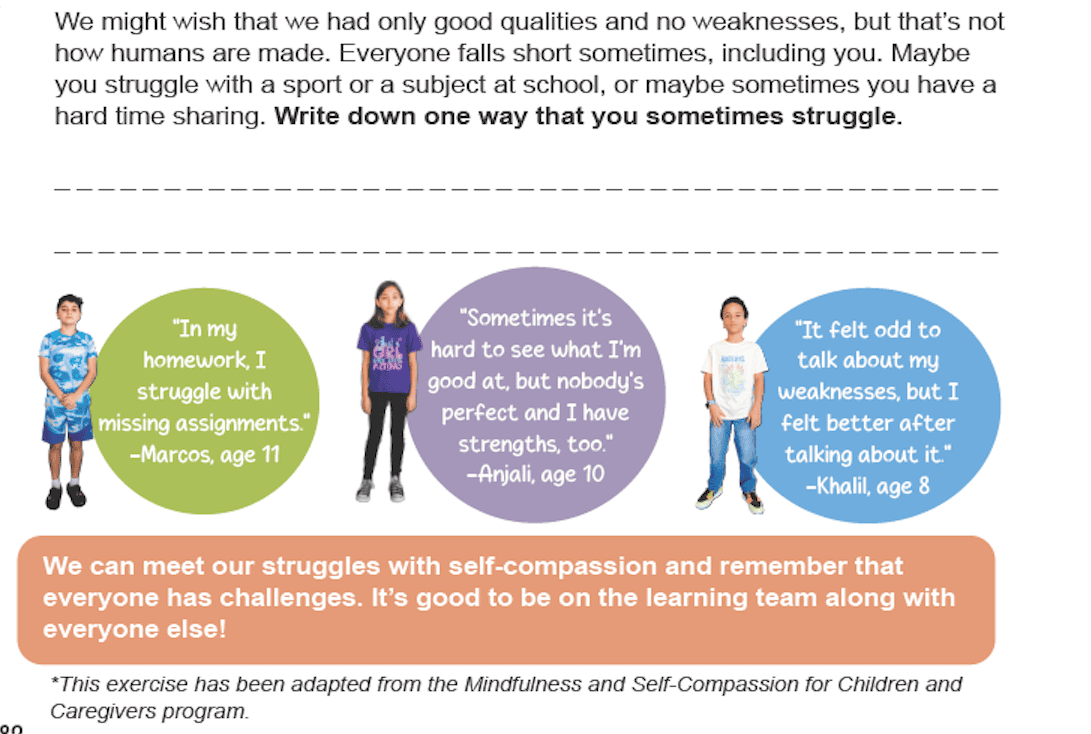
This activity helps children build self-acceptance and a more stable sense of self-worth. We can reinforce this idea with children by talking openly about our own strengths and struggles.
Additionally, when children are hard on themselves or feel like they are not good enough, we can invite them to think about what they would say to a good friend who was having the same sort of struggle (see the How would you treat a friend activity).
When something is tricky for us, children and adults alike can try to remember that just like everyone else, we all struggle sometimes. This small reminder can help us be kinder to ourselves and feel more connected to those around us.
Keep Exploring
- Learn how the Resilience Habit Animals can help kids grow resilience
- Try the How Would You Treat a Friend? activity to help kids practice self-compassion.
Would you like resources, lesson ideas, and new content delivered to your inbox? Join the newsletter.